Search

Cotton Flannel Bed Sheets

By MomOfSix | April 9, 2008

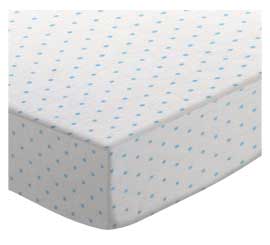
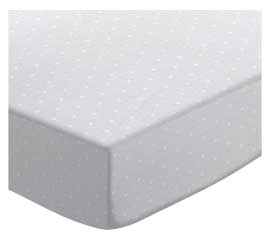
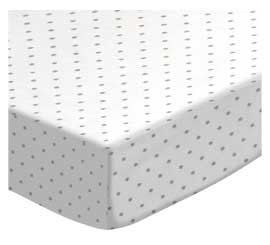
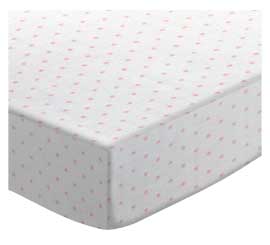
Soft, warm, cotton flannel bed sheets are the best on chilly, windy days.  It’s made of 100% cotton fabric and is napped on one side; making it soft and slightly fuzzy.  Flannel keeps body heat in while providing a soft and comfortable rest.  Bed sheets made of cotton flannel aren’t just cozy and warm, they’re durable too!  The cotton fabric weave is made to last through many washings.  The flannel gets even softer over time and through multiple washings.  Get cotton flannel bedding for every bed in the house.  It’s perfect for college dorm rooms too! Available in so many colors and prints, cotton flannel bed sheets can be found to match any bedroom décor.   

Did you know that you can actually save money on your heating bills, using flannel sheeting?  These sheets will help keep you warm all night long, without the need to turn up the thermostat!

Topics: Baby Essentials, Bedding, Sleeping Baby | No Comments »

Be Creative with Your Kids Bedding

By MomOfSix | April 9, 2008

You can find kids bedding in a large variety of fabrics, colors and patterns.  Kids bed sheet sets can reflect your children’s personalities.  You can get creative with fun bedding in colors and patterns kids love.  There are many color and style options for crib bedding as well. Experiment with colors and let your children choose the bedding they like.

Topics: Baby Essentials, Bedding, Sleeping Baby | No Comments »

Infant and child CPR classes

By admin | April 9, 2008

Learn to administer cardiopulmonary resuscitation (CPR) from a certified instructor. Classes are offered at hospitals, community centers, and local chapters of the American Red Cross or American Heart Association.

It’s preferable to attend a class than to try to learn a set of instructions from a book or Web site (although it’s good to have these materials available to refresh your memory).

Your instructor will use a child-size mannequin to demonstrate how to perform every aspect of the technique, such as how far back to tilt your child’s head and just how hard to strike her back if she’s choking on something. Practicing each step of CPR yourself, with an experienced instructor to guide you, will help you learn how to do it and remember what you’ve learned so you’ll feel prepared in the event of an emergency.

You can even have a certified instructor come to your home or another gathering place to teach a group you assemble. You might invite babysitters, grandparents, and anyone else who cares for your child. Or invite other parents and make a party out of it. The Red Cross asks for about three weeks’ notice to schedule an in-home class, with a minimum of six people and a maximum of 12.

Call your local American Red Cross chapter to find out where the nearest class is being offered or to schedule an in-home class.  During the CPR class, the instructor will teach you what you need to know in the event of a life-threatening emergency — if your child is choking or isn’t moving or breathing because of a fall or a near drowning, for example. She’ll also teach you accident prevention and childproofing measures.

A typical infant and child CPR class consists of two sessions: The first teaches how to care for babies from birth to age 1. The second addresses children from age 1 through age 12. The full class usually lasts about five hours, or four hours for just one of the sessions. The techniques are different for babies and older children, so you may want to learn both.  Prices vary according to where you live, but they typically cost $25 to $45 per person. These fees include take-home reference materials.

It’s worth this small investment of money and time to learn skills that could save your child’s life.  For those who can’t attend a CPR course, the American Heart Association offers a Family & Friends Anytime Personal Learning Program kit. It contains a small inflatable mannequin, a DVD, and a booklet of CPR instructions that can be used individually or to teach your family or a group. (Learning the technique with the kit won’t certify you in CPR, however.)

Topics: Baby Health | No Comments »

Get Your Twins to Sleep at the Same Time

By admin | April 9, 2008

Twins can mean double the trouble and double the fun, but it’s hard to remember the fun part when you’re struggling to get your crying twins to go to sleep and stay asleep. Here are some recommended strategies and tips.  Establish healthy sleeping patternsKeep your toddlers on the same sleep schedule to develop healthy sleep patterns and to give you a break.  If your twins nap or go to bed at different times, one or both of them may be awake at any given time, leaving you feeling overwhelmed.  Establish calming bedtime routines
Establishing a soothing bedtime routine such as a warm bath, a bedtime story, and a few minutes of cuddling, will help prepare your twins for sleep. If you stick to a consistent bedtime routine, your toddlers will soon learn the signal that it’s time to settle down.
 Put your little ones to bed drowsy, but not asleep
Help them learn to fall asleep on their own by letting them drift off once they’re in bed, rather than just before you put them down to sleep.  
 Tend to your calm toddler first
The tendency is to take care of the screaming baby before the calm one.  Try to resist this behavior because your quiet child will miss out on the attention he needs. Ensure that your quiet one is happy and settled first. Don’t worry about one twin waking up the other: Most twins and multiples aren’t bothered by their sibling’s crying, even when they’re in the same room.
Discourage nighttime waking Ensure that your twins remain quiet and calm at night by keeping their room dimly lit, and don’t play or talk to them during the night more than necessary.  You can give them a special soft toy or blanket to sleep with, which are comforting and can help them go back to sleep.  Try separate rooms
When your twins get older, they’re more likely to spend bedtime and naptimes talking and playing rather than getting their needed shut-eye. Some parents find that giving each twin his or her own room stops the nighttime antics and gives everyone some much-needed rest.

Topics: Sleeping Baby, Twins | No Comments »

Sleeping Strategies for Toddlers

By admin | April 9, 2008

Establishing a consistent bedtime ritual; one that includes some variation on a bath, book, and bed, is the best way to get your toddlers to drift off to sleep and stay asleep.  Following are more sleep strategies you can try.  Remember: What works for one family may not work for you, so do what’s best for you and your toddler.Comforting sounds Use a sound machine with sounds like heartbeats, ocean, rain and white noise to help drown out surrounding sounds. Sleeping aids  Keep soft toys and blankets, around the crib.  Babies tend to talk and play with toys in their cribs; allowing parents some extra snooze time. Also, extra pacifiers stored close by the crib always come in handy.Bedtime scheduleNot all children go to sleep at 7 p.m. and wake up at 8 a.m. Study your child’s sleeping pattern and plan his/her sleeping schedule accordingly.

Topics: Sleeping Baby | No Comments »

Home Daycare for Your Child

By admin | April 9, 2008

Selecting a home daycare for your child means asking a lot of questions and being observant. Start your search early as the better places fill up fast.  Note that you probably won’t find everything you’re looking for.  A licensed provider with a safe, clean home who loves kids and interacts well with them, and who offers a wide range of appropriate activities, yet does not have an educational background in early childhood development, is still probably a good bet.

Ideally, a good home daycare should have:A good reputation
A good home daycare should have a welcoming, friendly atmosphere and nurturing environment. Contact current clients for references.  Also, trust your own first impressions.  If you don’t get positive feedback, and it doesn’t feel right when you’re there, keep searching.
 Established ground rules
A home daycare should be flexible; where children can be picked up/dropped off as per parents needs, but it should also have clearly established rules for everything from operating hours to how to handle emergencies. That way you know the provider takes her responsibility, your baby, seriously.

Look for a provider with a strict sick policy. Find out which illnesses mean your child has to stay home and for how long. A tough policy may inconvenience you if your child is ill, but keeping sick children away from each other makes sense. A good home daycare helps cut down on illness by requiring all children to have current immunizations and regular checkups.

Make sure the provider has an open-door policy where parents are encouraged to stop by unannounced. This will ensure you that the caregiver has nothing to hide. A fun, stimulating curriculum
The best home daycares have structured schedules that include plenty of time for physical activity, quiet time, group programs, individual activities, meals, snacks, and free time. TV and videos should play little or no part in what your child does all day. A well-thought-out curriculum stimulates your child’s development and makes daily life more fun. Also, look for a home daycare that offers regular outings; as long as they’re well supervised, stimulating, and age-appropriate (trips to the park, the museum, etc.), these are good for your child and are often something large centers can’t offer.

Ensure the provider offers a wide range of age-appropriate toys that will encourage your child’s development and, as she gets older, stimulate creative, imaginative play.
Children should also have the chance to play outside every day (weather-permitting, of course) — running, jumping, and skipping are good for them physically, mentally, and socially. As with outings, make sure children are adequately supervised while they play outside. If you live in a city, where many houses don’t have safe outdoor play yards, make sure the home daycare has the next best thing, a spacious indoor area.

If you have to bring your child’s food, find out the provider’s guidelines. Some may require you to pack only nutritious foods; that’s okay — caregivers who don’t restrict candy or other sweets may not have your child’s best interests at heart. If the provider does offer food, find out what she serves at meal and snack times (and make sure she’s aware of your child’s allergies, if he has any). Does she encourage healthy eating habits and cover all the food groups? If not, keep looking.

Topics: Baby Health | No Comments »

Infants Sleeping in Adult Beds

By admin | April 9, 2008

The crib industry & the CPSC announced that 60 babies per year die from accidents in adult beds. According to their figures, most adult bed deaths occurred when babies were alone and unattended, many times on sofas.  It should be noted that the risk of SIDS is decreased for babies sleeping in a safe adult bed next to their protective moms (co-sleeping).  Sleeping in a crib in another room of the house is the greatest risk factor for SIDS; 10X the risk of sleeping in the same room as the parents!Studies show that after leaving the womb there is an important continuum of mother-provided regulation. While asleep, parental warmth, heartbeat, and breathing help to regulate proper body temperature and oxygenation in baby. Co-sleeping also encourages natural breast feeding and comforting, adding important hormonal and immune regulation.

Topics: Baby Health, Sleeping Baby | No Comments »

Cotton Jersey Knit Bed Sheets in All Sizes!

By mominthecity | April 7, 2008

Fitted, cotton jersey knit sheets can be found in almost any size and are popular with both children and adults.  Comfortable in all temperatures, these sheets are a natural selection for parents concerned about overheating.  Cotton jersey provides the same soft feel as flannel without causing the sleeper to sweat.  

Topics: Baby Essentials, Sleeping Baby | No Comments »

Cotton Jersey Knit Bed Sheets as Comfortable as Your Favorite T-Shirt!

By SuperMom | April 6, 2008

These stretchy, cozy bed sheets make for a most comfortable sleeping environment.  Made of 100% cotton, these sheets come in a variety of colors to compliment any décor.  Heavy cotton jersey knit bed sheets are cool in the summer and warm in the winter, making them an excellent buy.  They are produced with a combed cotton mechanism that gives them the utmost durability and softness.  Combing involves removing the shortest fibers, resulting in a high quality yarn with excellent strength and softness.  The fabric is then knitted instead of woven which creates the soft, breathable texture that jersey is known for and it gets even softer after each washing.  The jersey knit technique was invented on the island of Jersey, in the English Channel.

Topics: Baby Essentials, Sleeping Baby | No Comments »

Have Fun Selecting Your Kids Bedding

By SuperMom | April 5, 2008

Today, kids bedding is available in so many colors and patterns that it’s easy to match any décor and bedroom theme.  Decorating is easy when you paint the walls a neutral color and use themed bedding to create a fun look.  With minimal effort, you can easily change the look of the bedroom and let it grow with your child.  By simply changing the bedding according to your children’s changing tastes, you can change the look of the entire room!  Younger children will likely choose Disney-type themes, while older kids will opt for sports themes for boys and flowers and pastels for girls.

Topics: Baby Essentials, Bedding, Sleeping Baby | No Comments »

« Previous Entries